WW/OCEANFREIG
Container Ship Sinks in Strait of Hormuz as Attacks Escalate
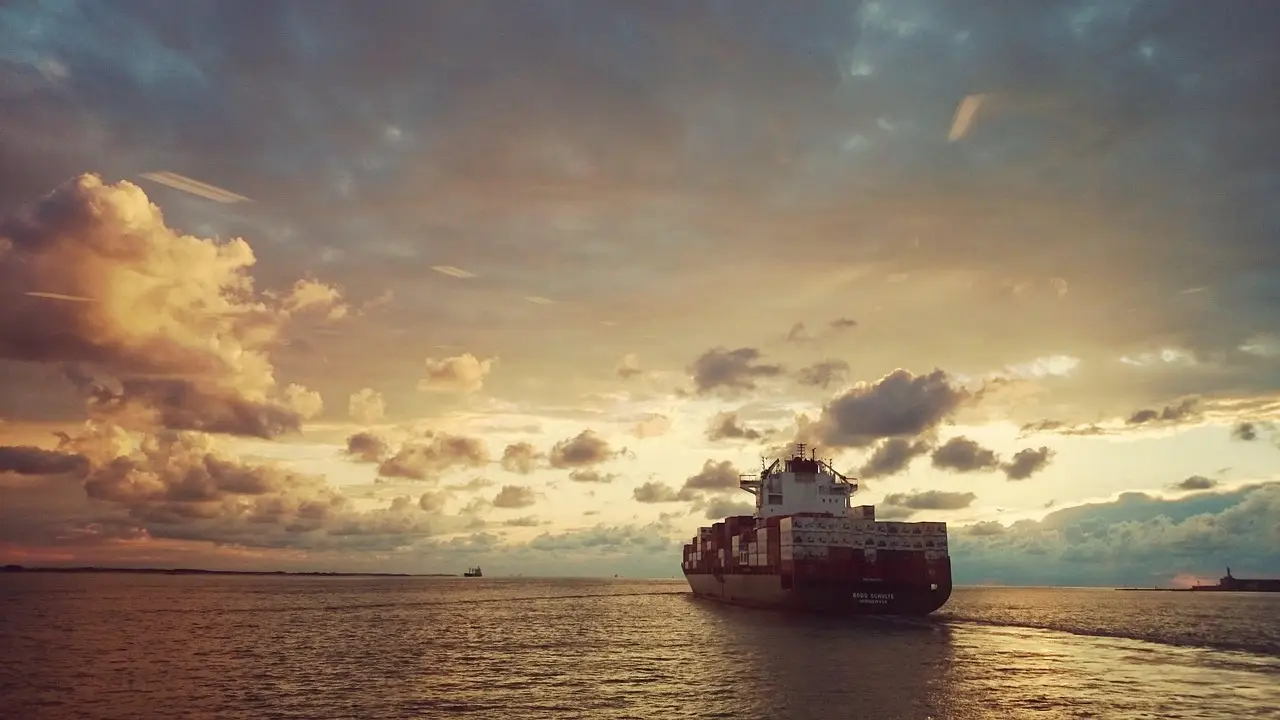
A container ship has sunk in the Strait of Hormuz as regional attacks escalate, Bloomberg reports, hitting the Gulf's only maritime gateway.
- Desk
- Ocean Freight
- By
- Elena Vasquez
- Filed
- Length
- 405 words
- Read
- 2 min
Key points04
- A container ship sank in the Strait of Hormuz amid escalating regional attacks, per Bloomberg.
- The sinking was captured on video and published by Bloomberg.
- Hormuz has no practical reroute for Gulf container services.
- The incident is expected to accelerate war-risk premiums and surcharges on Gulf calls.
A container ship has sunk in the Strait of Hormuz as attacks in the region escalate, Bloomberg reported, confirming the loss of a box vessel in the chokepoint that carries roughly a fifth of the world's oil and a rising share of Asia–Europe container traffic.
The sinking, captured on video and published by Bloomberg, marks a sharp escalation in a pattern of incidents that had already pushed carriers toward risk surcharges and rerouting. For shipping lines calling at Gulf ports, the loss of a vessel in Hormuz turns a theoretical war-risk exposure into a concrete hull and cargo event.
What does the sinking change for carriers?
The Strait of Hormuz is the maritime gateway for container services serving Jebel Ali, Dammam, Sohar and the wider Gulf cluster. Any vessel lost there removes capacity from trade lanes that Gulf importers depend on, and it does so at the narrowest, least divertible point in the network.
Unlike Bab el-Mandeb, where carriers could reroute around the Cape of Good Hope at the cost of roughly ten extra days, Hormuz has no practical detour. Ships serving Gulf ports must transit the strait or not serve the Gulf at all.
That geography concentrates the commercial consequences:
- Carriers face rising hull, war-risk and cargo premiums on every Gulf call, costs that historically pass quickly into emergency surcharges.
- Forwarders should expect space tightening on Gulf loops as lines reassess port calls, plus potential refusal clauses for high-value cargo.
- Shippers with Gulf-bound supply chains — petrochemical inputs, retail replenishment, project cargo — face the prospect of both higher rates and longer, less reliable transit times.
Bloomberg linked the sinking directly to escalating attacks in the region, framing it as part of a broader security deterioration rather than an isolated maritime accident.
Why the market is watching rates and cover
Each prior escalation in Middle Eastern waters has followed a recognizable commercial sequence: incidents at sea, then war-risk area widenings by insurers, then surcharges, then structural rerouting. A vessel actually sinking compresses that timeline, because underwriters price the event, not the threat.
The open question for the coming weeks is whether carriers begin suspending Gulf calls outright — as they did for Israeli ports in earlier phases of the conflict — or continue serving the region under elevated premia. The answer will determine whether Gulf-bound spot rates spike on withdrawn capacity or drift upward on cost pass-through alone.
Source: Google News: container shipping
More from Elena Vasquez
Show full bio
News editor covering people, launches and day-to-day practice in Ocean and air freight, container shipping at Waybill Wire.
533 articles
Related05
Container Ship Sinks in Strait of Hormuz After Attack
Container Ship Sinks in Strait of Hormuz as Attacks Ramp Up
Iran Claims Containership Struck Mine and Sank in Strait of Hormuz
Container ship sinks after mine strike in Strait of Hormuz
Container ship sinks after Strait of Hormuz attack; details unconfirmed